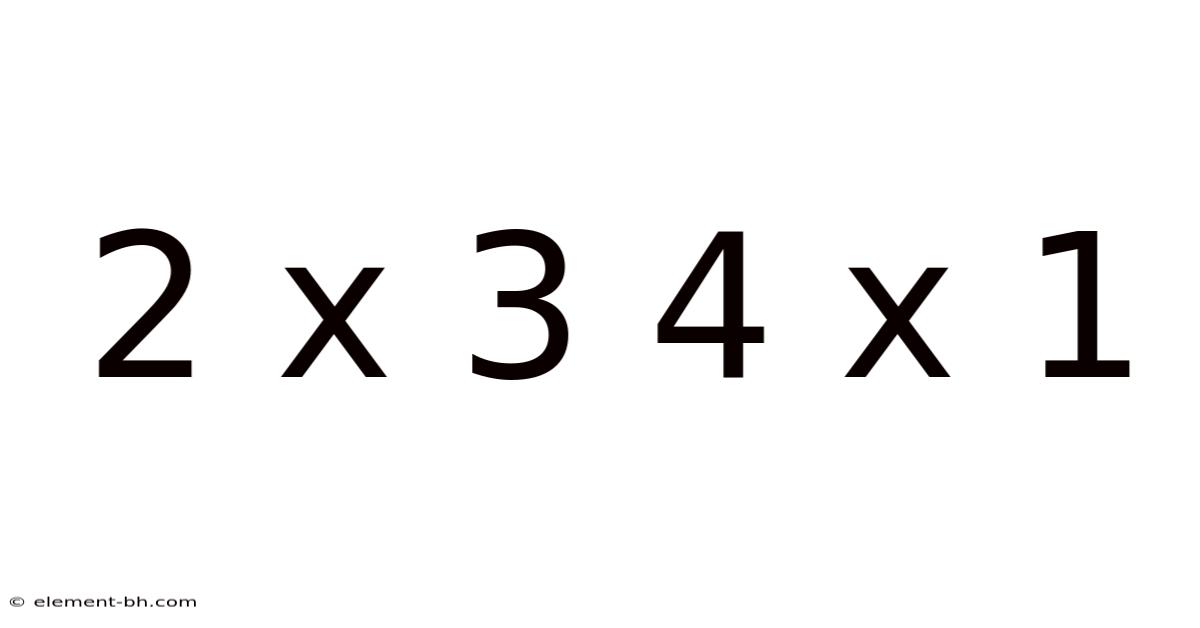
Introduction: Mastering the Basics – 2×3 and 4×1 Multiplication Facts
Learning to multiply is one of the first major milestones in a child’s mathematical journey. In practice, while the concept may seem simple, building automaticity with basic facts like 2 × 3 and 4 × 1 lays the groundwork for more complex operations such as division, fractions, and algebra. This article explores the significance of these two multiplication facts, offers clear explanations, visual strategies, and practical tips, and answers common questions to help students, parents, and teachers reinforce these essential skills It's one of those things that adds up..
Understanding Multiplication: More Than Just Repeated Addition
At its core, multiplication is a shorthand for repeated addition. That's why ” Similarly, 4 × 1 means “four groups of one” or “one added four times. When we write 2 × 3, we are saying “two groups of three” or “three added twice.” Recognizing this relationship helps learners see why the answers are 6 and 4, respectively, rather than memorizing isolated numbers.
Key Concepts to Keep in Mind
- Commutative Property: 2 × 3 equals 3 × 2. The order of factors does not change the product.
- Identity Property: Any number multiplied by 1 stays the same. This is why 4 × 1 = 4.
- Zero Property: Any number multiplied by 0 results in 0 (a related fact that often follows after mastering 1‑times facts).
The Facts: 2×3 and 4×1 in Detail
2 × 3 = 6
- Why it works: Two groups of three objects give a total of six. Visualizing two rows of three dots or two sets of three apples makes the concept tangible.
- Pattern Recognition: The 2‑times table follows an easy pattern: 2, 4, 6, 8, … Adding 2 each time. Knowing this pattern helps students derive 2 × 3 by counting: 2 (1×), 4 (2×), 6 (3×).
4 × 1 = 4
- Why it works: Four groups of one object simply count the objects themselves. This fact introduces the identity property of multiplication.
- Connection to Division: Because 4 × 1 = 4, the reverse operation shows that 4 ÷ 4 = 1 and 4 ÷ 1 = 4, reinforcing the relationship between the two operations.
Visual and Hands‑On Methods
1. Array Model
- 2 × 3: Draw a grid with 2 rows and 3 columns. Count the total squares (6). This visual confirms the product.
- 4 × 1: Draw 4 rows with 1 column each. The shape looks like a vertical line of 4 blocks, again totaling 4.
2. Number Line Jumping
- For 2 × 3, start at 0 and make three jumps of size 2: 0 → 2 → 4 → 6.
- For 4 × 1, make four jumps of size 1: 0 → 1 → 2 → 3 → 4.
3. Manipulatives
- Use blocks, beads, or counters. Separate them into groups of 2 and 3, then combine. For 4 × 1, simply line up four single items.
These concrete experiences help students transition from physical understanding to mental recall.
Real‑World Applications
Multiplication facts are not abstract; they appear in everyday situations:
- Shopping: If an item costs $2 and you buy 3, the total is $6. Knowing 2 × 3 instantly tells you the price.
- Cooking: A recipe calls for 4 servings, each needing 1 cup of flour. You need 4 cups—4 × 1.
- Time: If a show repeats every 2 hours for 3 episodes, the total runtime is 6 hours.
Recognizing these connections makes learning feel relevant and boosts motivation.
Tips for Mastering 2×3 and 4×1
For Students
- Flashcards: Write the problem on one side, the answer on the other. Quiz yourself daily.
- Songs and Rhymes: Set the facts to a simple rhythm. “Two times three, six for me!”
- Practice Games: Use board games that involve moving a piece a number of spaces equal to the product (e.g., roll a die, then move that many spaces multiplied by the fact).
- Teach a Peer: Explaining the concept to someone else reinforces your own memory.
For Parents and Teachers
- Use Consistent Language: Say “two times three” rather than “two multiplied by three” to align with everyday speech.
- Celebrate Small Wins: Acknowledge quick recall of 2 × 3 or 4 × 1 with stickers or praise.
- Mix Visual and Verbal: Alternate between drawing arrays and verbal recitation to engage different learning styles.
Common Mistakes to Avoid
- Confusing Order: Some learners think 2 × 3 is different from 3 × 2. Reinforce the commutative property with visual arrays.
- Skipping the Identity Property: Students may overthink 4 × 1 and try to add instead of recognizing that multiplying by 1 leaves the number unchanged.
- Rushing to Memorization: Without understanding the underlying concept, facts can be forgotten quickly. Ensure conceptual grasp before pure recall.
Frequently Asked Questions (FAQ)
Q: How can I help my child remember 2×3 and 4×1?
A: Use everyday objects for hands‑on practice, create simple rhymes, and review regularly with flashcards. Consistency is key Simple, but easy to overlook..
Q: Is it okay to use calculators for these facts?
A: Calculators are useful for complex problems, but basic facts should be memorized to free up mental resources for higher‑level math Not complicated — just consistent..
Q: What comes after mastering 2×3 and 4×1?
A: Typically, students move on to the 3‑times table, 5‑times table, and then mixed review. Strong recall of early facts speeds up this progression.
Q: How does knowing these facts help with division?
A: Division is the inverse of multiplication. If you know 2 × 3 = 6, you instantly recognize that 6 ÷ 2 = 3 and 6 ÷ 3 = 2 Easy to understand, harder to ignore..
Q: Can these facts be applied in algebra?
A: Yes. When simplifying expressions like
